Pay boost for Army drivers

The driver specialist trade will be restructured so soldiers who operate Army’s fleet of medium and heavy trucks receive a pay increase from April 2.
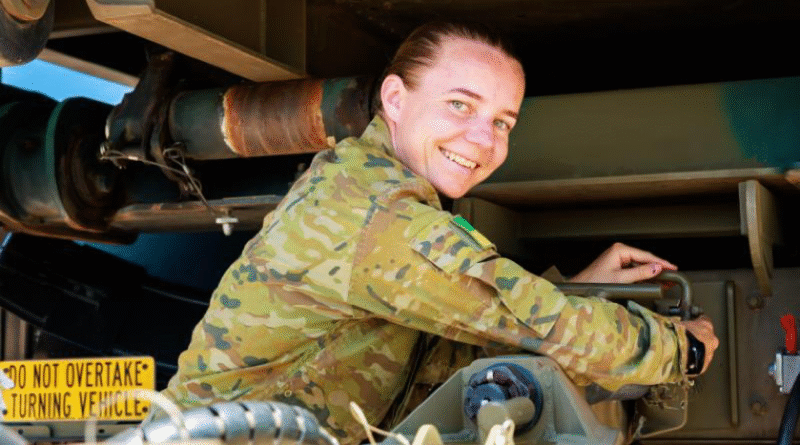
CAPTION: Corporal Jessica Hoult from the Regional Driver Training Wing at Robertson Barracks says the pay increase makes sense. Story by Captain Jacob Joseph. Photo by Private Darcy Fisher.
The ADF Remuneration Tribunal approved the changes in December.
The pay increases are targeted at soldiers operating medium and heavy vehicles and ancillary equipment, such as trailers, as well as senior soldiers planning transport operations.
NT Regional Driver Training Wing’s Corporal Jessica Hoult said the extra pay reflected the complexity of the new fleet.

More than 3500 Rheinmetall MAN medium and heavy trucks, 2200 trailers, 1000 modules and 2000 flat racks were delivered over the decade-long Land 121 project.
“The pay increase makes sense,” Corporal Hoult said.
“Going from the Mack and Unimogs [to the Rheinmetall MAN military vehicles], they are heavier and there’s much more involved, such as permitting requirements.”
Six skill grades will get a pay increase across junior and senior ranks.
For privates, driver specialist grade 3 will be renamed driver heavy vehicle, with pay increasing to pay grade 3.
Operator heavy vehicle becomes driver heavy vehicle advanced at pay grade 4. Operator specialist vehicle grade 1 also gets bumped up to pay grade 4.
To recognise sergeants who plan and control live fire and mounted range practices for units equipped with medium-heavy vehicles, a new skill grade – transport operations supervisor grade 2 – will be introduced.
The new structure is designed to align with the principles of the Total Workforce System through career flexibility and additional entry pathways to support transfers and recruitment.
Royal Australian Corps of Transport Head of Corps Brigadier Colin Bassett said the pay changes were in recognition of how the role has changed.
“Driver specialists are expert advisers for land vehicle operations, and they perform a specialised role,” Brigadier Bassett said.
“The review has been undertaken over an extended timeframe. This remuneration package acknowledges that specialisation and the capability that they provide to the integrated force.”
Individual letters will be sent to the workforce in late February and early March informing them of their responsibility during the transition period.
.
.

.
.