Defence funds newspapers digitisation
Step back in time this summer with Defence early service newspapers, which capture the spirit of Australia’s armed forces and the society they served.
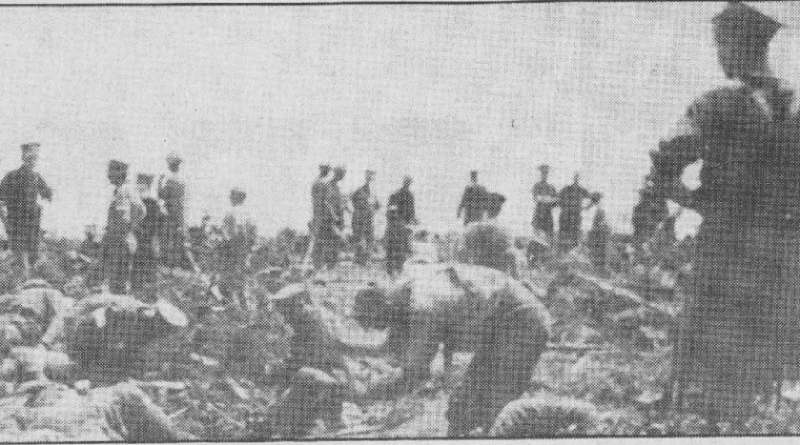
CAPTON: A black-and-white newspaper clipping from a 1980s Army Newspaper.
Defence is funding the digitisation of these historic editions in Trove, giving every Australian the chance to explore the collection.
Examples…
Army News Thursday 26 January 1984

Excerpt from a story called ‘Masking the tears during NBC exercise’. Army, 26 January, p. 5.
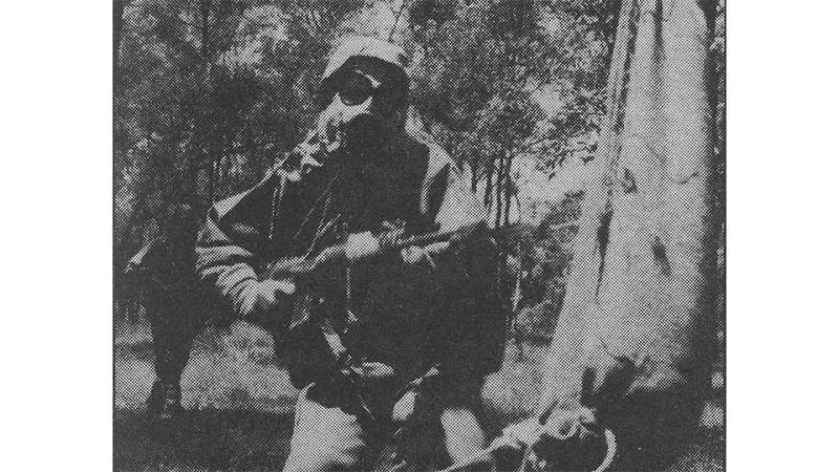
Holsworthy: Being short of breath was nothing new for the soldiers of B Company, 4 Battalion, The Royal New South Wales Regiment, but it took on another dimension recently.
Gasping for fresh air, they took part in nuclear/biological and chemical training, reports [Army News’ unit correspondent] Army’s UC, Lieutenant Peter Morse.
Called Shortbreath, it included a continuous training circuit/live firing serials, a company advance to contact with a company assault, and training activities during and after exposure to CS gas in a specially constructed chamber.
Read more on Trove.
Army News Thursday 24 January 1985
Excerpt from a story called ‘Battling on the bushfire front’. Army (National: 1980 – 2024), 24 January, p. 1.
Melbourne: Nearly 500 soldiers, sailors and airmen were rushed to trouble spots throughout Victoria as widespread bushfires threatened homes and townships.
In the Mt Buffalo National Park, 40 soldiers from Albury-Wodonga based units battled blazes while another 60 beat back the flames near Myrtleford and Bright where the fires were burning on a 20-kilometre front.
Read more on Trove.
.
.
Navy diver breaks own record in search of wreck
1961 Royal Australian Navy News, 30 March, p. 4, http://nla.gov.au/nla.news-article267347331
Former Navy clearance diver Wally Reynolds descended 327 feet to set an Australian aqualung diving record off Newport in March 1961.
The dive broke the existing record by 87 feet.
Mr Reynolds did not attempt the world aqualung record, which was 396 feet or 120 metres at the time, because he considered it too dangerous.
Fast forward to July 2025, Navy clearance diver Lieutenant Ruslan Pnevski made it to the wreck of SS Nemesis – a coal hauler that sank off the NSW coast in 1904.
Lieutenant Pnevski descended 160 metres to reach the wreck and in doing so broke his previous diving record.
Lieutenant Pnevski said, “More people have climbed Everest than have dived to 100 metres, and the difference between 100 metres and 160 metres is massive”.
“To go to 160 is quite unique, and to be one of a small amount of people in the world to be able to achieve a depth like that and do it in challenging conditions, it’s amazing.”
Explore more stories about the Royal Australian Navy in Trove.
.
.
8 Squadrons in biggest mercy operation
The most damaging floods in Australian history have once more demonstrated the ability of the Royal Australian Air Force (RAAF) to serve the Australian community in times of civil emergency.
Faced with disastrous flooding, which inundated huge areas of the continent, the RAAF responded with the greatest emergency flood relief effort in its history.
RAAF helicopters and Caribou, Hercules and Dakota air transports rescued hundreds of men, women and children from the threat of drowning.
Thousands were fed and clothed by airlift; whole town populations were flown out to higher ground; communities cut off by road and rail were sustained with fuel, food and supplies as well as equipment to battle the floods, while starving cattle and sheep were fed with airdropped fodder.
RAAF Iroquois helicopters flew the sick and injured to medical aid centres. At Broken Hill, they substituted for Royal Flying Doctor Service aircraft….
Read the original story from 1974 on Trove and explore Trove for more Royal Australian Air Force stories
.
.

.
.